


Quick answer: A shower stool provides a compact seat with fewer supports. A shower chair adds a backrest and often armrests, which may help with positioning and transfers. The right option must fit the person and the shower, stand level on all feet and remain stable on a wet surface.
Reduced standing tolerance, fatigue or unsteadiness can make seated showering useful. Because bathrooms combine water, soap, hard surfaces and limited space, choose purpose-designed equipment—never substitute a plastic garden stool or household chair.
| Feature | Shower stool | Shower chair |
|---|---|---|
| Back support | Usually none | Usually included |
| Arm support | May be absent or optional | Common on many models |
| Footprint | Often smaller | Usually larger |
| Transfer assistance | Less structure to push from | Armrests may assist a controlled sit-to-stand |
| Best use | Depends on balance, transfer ability, body size and the actual shower layout | |
Choose support based on the person
A stool can suit someone who has good sitting balance and mainly needs to conserve energy. A chair may be more appropriate when the user benefits from a backrest, armrests or a clearer surface to locate before sitting. Neither option is automatically safer: a poorly fitted chair can obstruct the transfer, while a stool can offer too little support.
Arrange an occupational therapy assessment after falls, with significant balance or sensation changes, or when the person needs physical assistance to transfer.
Measure the usable shower floor
Measure the flat area inside the shower—not the overall bathroom. All four feet must sit fully on a level surface. Do not straddle a shower lip or place one leg on a slope that makes the seat rock. Check door swing, screens, taps, handheld shower hose, grab rails and the space needed to turn or use a walking aid.
Queensland Health advises purpose-designed shower seating rather than garden furniture, which may not be slip resistant or able to withstand heat and soap.
Set seat height for a controlled transfer
When seated, the user needs stable foot contact and a comfortable hip and knee position. A higher seat may reduce the effort of standing, but too high can leave the feet unsupported. A low seat can make standing harder. Adjust all legs to the same intended height unless the manufacturer specifically permits another setup.

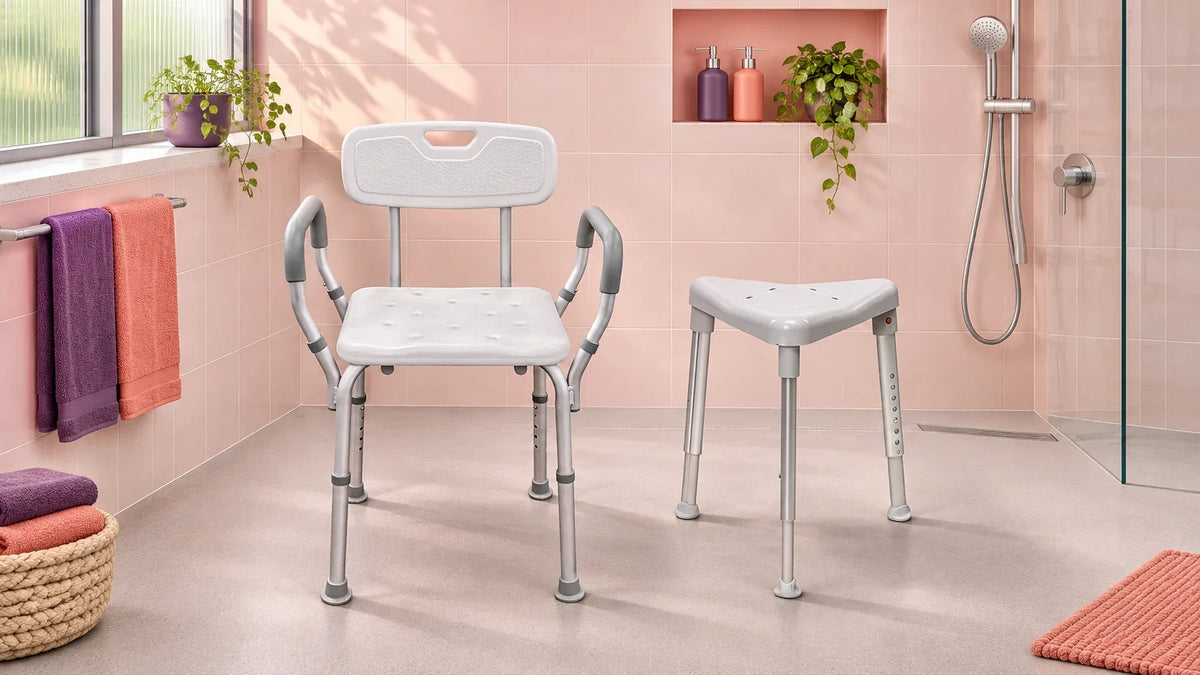
A chair adds back and arm support; a stool offers a smaller footprint.
Armrests and backrests change the transfer
Armrests can provide a defined hand position when lowering and pushing to stand. They must not block side access or conflict with a shower screen. A backrest can support a person who fatigues, but the seat still needs enough depth for the user to sit well back without sliding.
NSW Clinical Excellence Commission guidance recommends backing up until the seat can be felt behind the legs, using the armrests where appropriate and lowering with control. When standing, feet should be firmly placed before moving forward from the seat.
Look at the seat, drainage and feet
- Surface: textured, rounded and easy to clean, without sharp edges.
- Drainage: holes should allow water to clear without creating uncomfortable pressure points.
- Ferrules: rubber feet should be intact, clean and designed for wet floors.
- Frame: inspect joints for looseness, corrosion or cracking.
- Safe working load: the user must remain within the current product limit.
Product examples from AATC
The SMIK Aluminium Shower Chair with Arms is a lightweight, height-adjustable chair with back and arm support. The Etac Edge Shower Stool is a compact corner-style stool offered in low and standard options. These examples show a functional difference, not a recommendation for every user.

All feet need level support, with clear access and washing items within seated reach.
Set up the shower around seated use
Place soap, controls and the handheld shower hose within easy reach so the user does not lean beyond the seat base. Keep the floor clear and dry outside the shower. A non-slip mat may help only when it lies flat, does not create a trip edge and is suitable for the surface.
Cleaning and maintenance
- Rinse soap residue and clean with products permitted by the manufacturer.
- Check every ferrule, leg pin and fastener regularly.
- Stop using the product if it rocks, slides or shows cracks, corrosion or damaged feet.
- Recheck height and stability after anyone adjusts or moves the chair.
Trial checklist
- Measure the flat shower floor and narrowest entry.
- Confirm the user fits between the arms and within the safe working load.
- Set the height while the user wears normal bathroom footwear, if used.
- Practise approach, turn, sit and stand in a dry setup first.
- Check reach to controls and washing items from the seated position.
- Reassess in the real wet environment with appropriate professional support.
Frequently asked questions
Is a shower chair safer than a stool?
It provides more support, but safety depends on fit, transfer technique and bathroom layout. A compact stool may suit some users better.
Can I put the rear legs outside the shower?
No. The product should stand level with all feet fully supported unless it is a purpose-designed transfer bench installed according to its instructions.
Can I use a household chair?
No. Purpose-designed shower equipment uses wet-area materials, drainage and slip-resistant feet.
How often should it be replaced?
There is no universal interval. Inspect it regularly and stop use if damaged, unstable or corroded.
Next step: Browse AATC’s shower chairs and stools, compare dimensions with the bathroom and arrange a trial when fit or transfer safety is uncertain.
Sources and further reading
- NSW Clinical Excellence Commission: Shower Chair Equipment safe-use guide
- Queensland Health: Safety in and around the home
- Queensland Health: Static Bathing and Toileting Aids
This article provides general information and does not replace an individual bathroom, falls or transfer assessment.